Cognitive Performance.
Five layers, bottom-up. Foundation does most of the work. Stack stimulants last, after you've built the base.
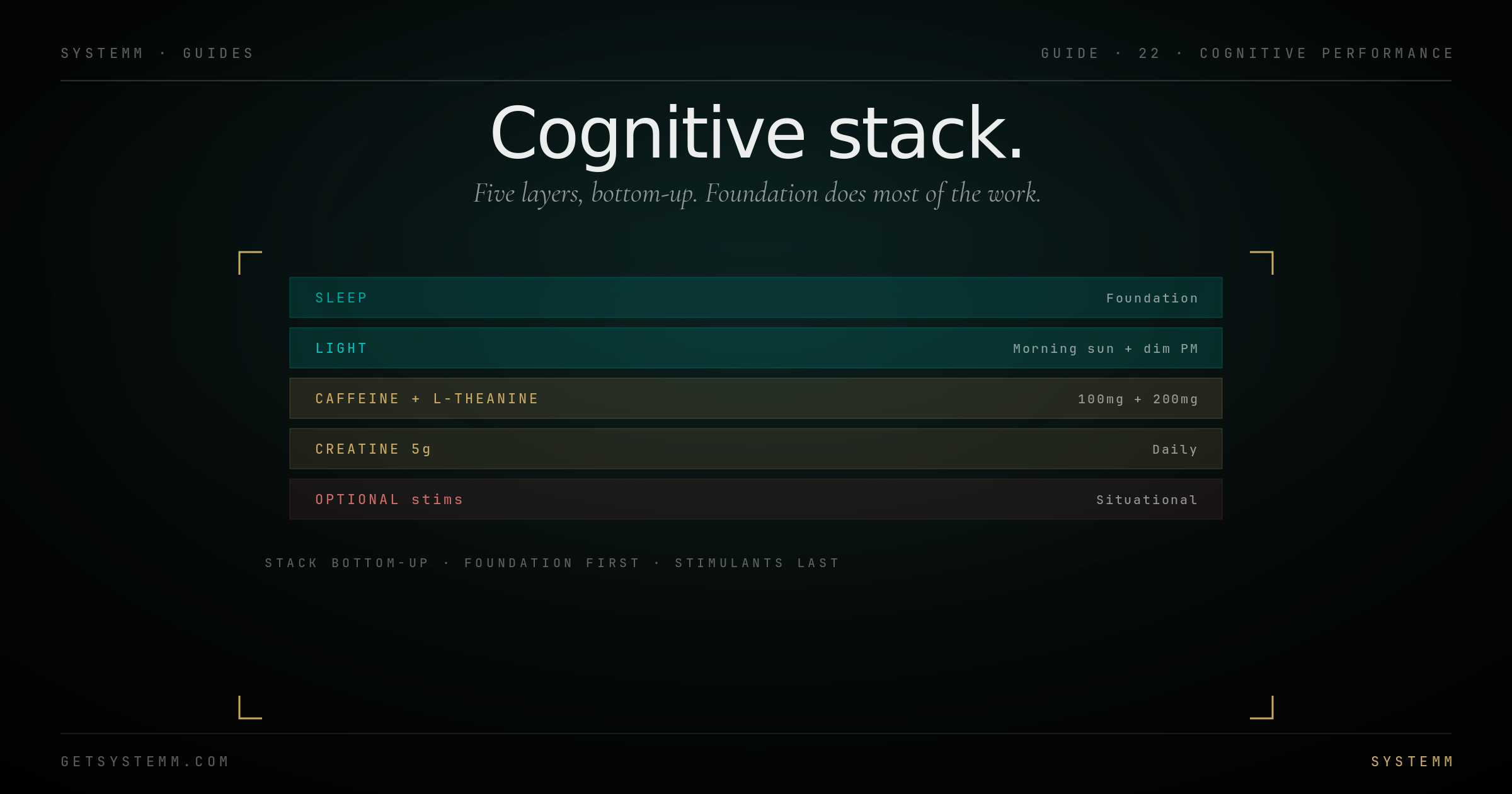
Stack bottom-up.
The layers below carry the most weight. Most cognitive enhancement attempts fail because they skip directly to the top.
Layer 1: Sleep. Non-negotiable. 7+ hours, consistent timing. Without this, no other intervention works at full effect. Most cognitive complaints disappear when sleep is fixed.
Layer 2: Light + circadian. Morning sun within 30 minutes of waking, dim ambient light after sunset, blue-blocking glasses for evening screens.
Layer 3: Exercise. Cardio for mood and BDNF, strength training for executive function. Either is better than none.
Layer 4: Stable nutrition. Adequate protein, real food, hydration, blood-sugar stability. CGM for two weeks shows where your meals are sabotaging cognition.
Layer 5: Targeted compounds. Caffeine + L-theanine, creatine, optional situational stimulants. Top of the stack.
How to actually use it.
Timing, dose, and pairing matter more than most users realize.
Delay first caffeine 60-90 min after waking. Adenosine clears during early morning hours; coffee before then blocks receptors that are already empty. Cortisol awakening response provides energy in this window.
Pair with L-theanine 200mg. L-theanine smooths the alertness curve, reduces jitters, and modestly increases focus. Take together with caffeine.
Last dose 8+ hours before bed. Half-life is ~5 hours; afternoon coffee still measurably impairs deep sleep.
Total daily dose 200-400mg for most users. Above 400mg, side effects (anxiety, jitters, sleep impairment) start outweighing benefit. Some users are genetically slow metabolizers (CYP1A2 variants) and need much less.
The cheapest cognitive enhancer with real evidence.
Most studied supplement on the planet. The cognitive case is now strong, not just the muscle case.
5g daily, any time of day. Loading phase not necessary for cognitive effects (it matters more for muscle saturation). Hits steady state in 3-4 weeks.
Cognitive evidence: most consistent in sleep-deprived populations and in tasks requiring memory or sustained attention. Effect size is modest but real and replicated.
Form: creatine monohydrate. Don't pay for HCl, ethyl ester, or other 'advanced' forms, no evidence they outperform monohydrate.
Safety: extensively studied. The main caveat is people with chronic kidney disease should clear with a physician first; for healthy people the safety record is excellent.
Top-of-stack interventions.
Use sparingly. Effective in the right window; counterproductive as daily defaults.
Modafinil 100-200mg. Prescription. Strong wakefulness effect, lasts 12+ hours. Best for: long high-output workdays, jetlag adjustment, deadline sprints. Worst for: daily use (tolerance, sleep disruption, dependence risk).
Nicotine gum 2mg. Sharp, short-acting focus enhancement. Used by special operations communities for cognitive performance under fatigue. Highly addictive, use 2-3x/week max, never daily.
Yerba mate / matcha. Caffeine + L-theanine + other minor stimulants. Smoother subjective effect than coffee. Use as a caffeine source rather than a stack add-on.
Avoid: 'racetams,' phenibut, stacks marketed as 'limitless pills.' Either no evidence, side-effect heavy, or both.
- Daily stimulant use without rest days.
- Needing the stimulant to feel 'normal' rather than 'enhanced.'
- Sleep dropping below 7 hours due to stimulant timing.
- Anxiety / palpitations becoming the new baseline.
Related.
For educational purposes only. Stimulants, including prescription stimulants used off-label, carry real risk. Off-label cognitive enhancement is not a substitute for treating underlying sleep, mood, or attention disorders. Consult a qualified physician before initiating any cognitive enhancement protocol. This information does not substitute for personalized medical advice.