Brain Fog Decision Tree.
The most common 'something's off' complaint, with no single workup. Five buckets, test each before stacking drugs.
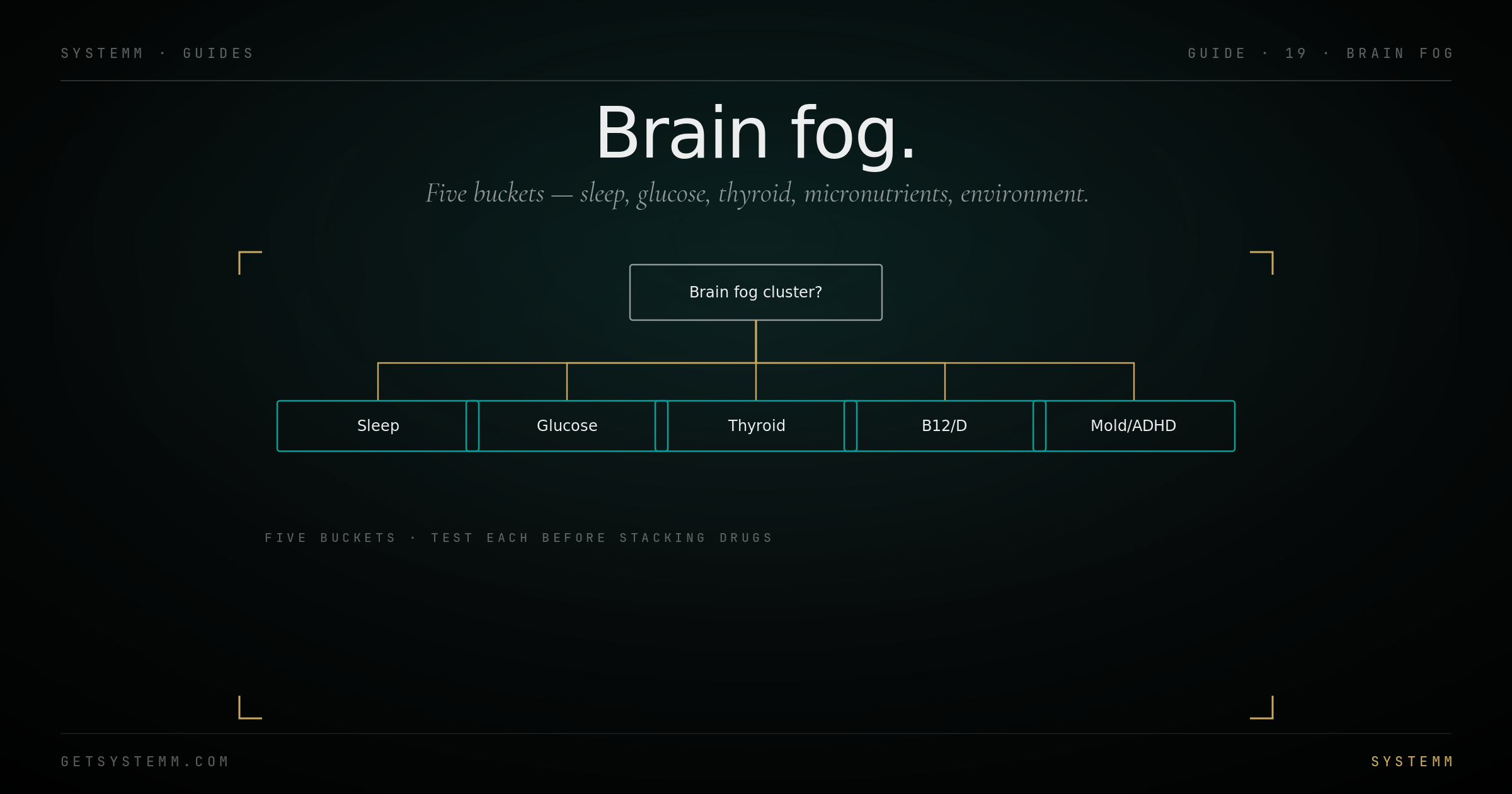
Where brain fog actually comes from.
Almost every persistent brain-fog case sits in one of five buckets. Diagnose the bucket first; the intervention follows.
Sleep. The most common cause and the most overlooked. Less than 7 hours of quality sleep, measured by tracker, not memory, degrades cognition equivalent to 0.05 BAC. Most people with chronic brain fog have a sleep problem they've normalized.
Glucose dysregulation. Post-meal crashes, undiagnosed pre-diabetes, reactive hypoglycemia. A CGM for two weeks resolves the question.
Thyroid dysfunction. Subclinical hypothyroidism (TSH > 2.5 with low free T3) is a classic brain-fog cause that standard labs often miss.
Micronutrient deficits. B12 below 400 pg/mL, vitamin D below 30 ng/mL, low ferritin in menstruating women, each independently causes fog.
Environmental / situational. Mold exposure, undiagnosed ADHD, depression, COVID sequelae, alcohol, certain medications (statins, anticholinergics, antihistamines, SSRIs in some).
What to test, in order.
Cheap and high-yield first. Save expensive specialist workups for after the basics return negative.
Two weeks of objective sleep tracking. Oura, Whoop, or even Apple Watch. If you average <6.5 hours or your deep sleep is consistently <45 minutes, you have your answer.
Two weeks of CGM data. Stelo or Lingo. Look for post-meal peaks >160 mg/dL, dips below 65 mg/dL within 90 minutes of meals, or chaotic curves overall.
Full thyroid panel. Not just TSH. Free T3, free T4, reverse T3, TPO antibodies. Conversion failures hide from TSH-only screens.
Bloodwork basics + B12 + vitamin D + ferritin. See the Bloodwork Basics guide. Adds maybe $50 to a standard panel.
If all of the above are clean: consider ADHD evaluation (lifetime adult diagnosis is increasingly recognized), depression screening (PHQ-9), mold exposure history (VCS test or ERMI dust test), and a sleep study if snoring/witnessed apnea exists.
- Start with expensive specialist tests when you haven't tracked sleep or glucose.
- Try nootropics before the workup, they mask, they don't fix.
- Accept 'normal labs' as the final answer when the standard panel is thin.
Bucket-specific fixes.
Each bucket has a known intervention. Once you've identified the bucket, the protocol is short.
Related.
For educational purposes only. Persistent cognitive symptoms warrant evaluation by a qualified physician. Self-diagnosis and self-treatment can delay accurate diagnosis. This information does not substitute for personalized medical advice.