Grocery Shopping.
The perimeter rule, label-reading, the 80% staples. When organic actually matters. Protein per dollar.
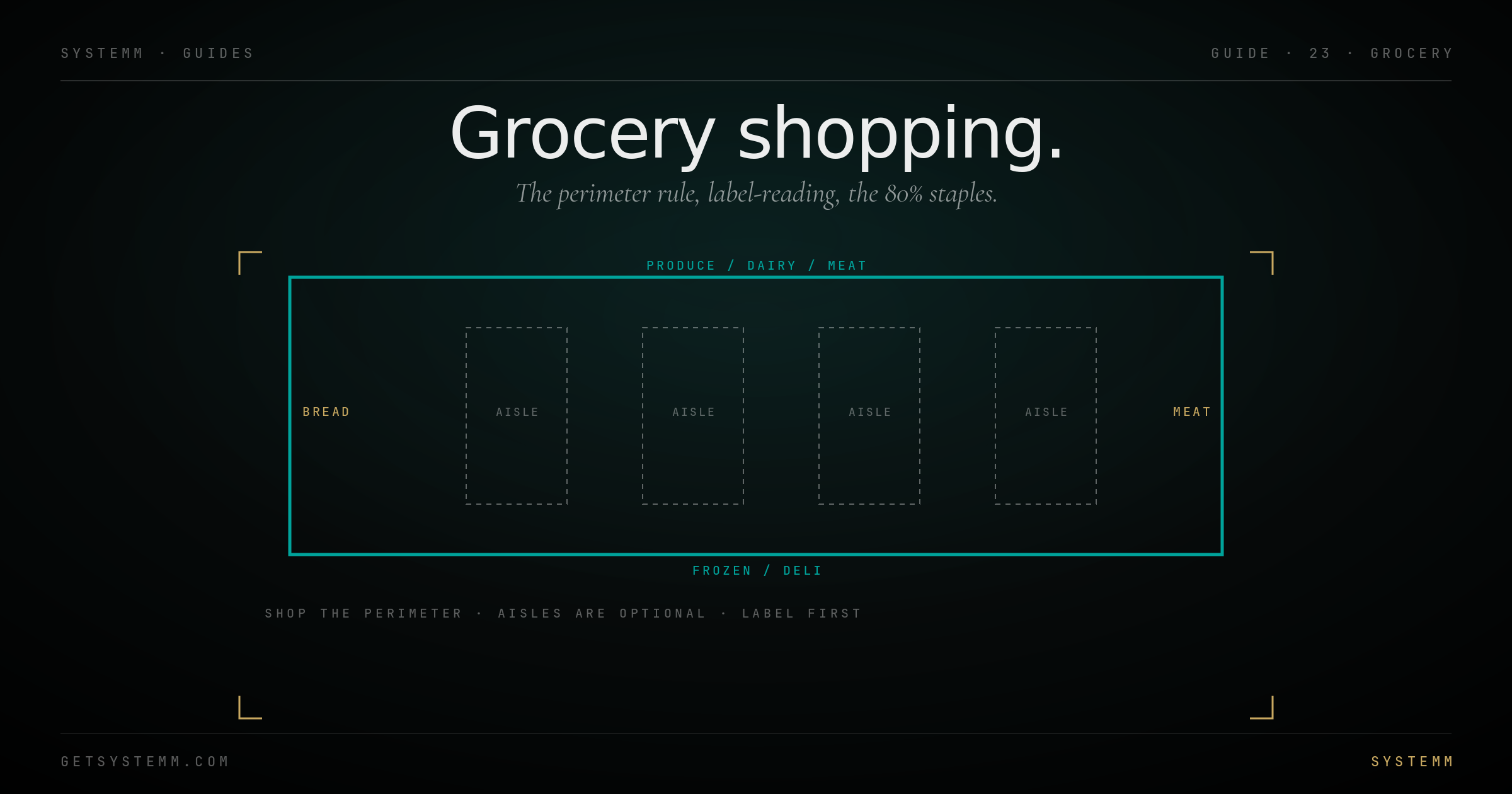
Why the outside of the store wins.
Real food lives on the perimeter. The middle aisles are mostly engineered products.
Stores are laid out predictably: refrigerated whole foods (meat, dairy, produce) on the perimeter; shelf-stable processed foods in the middle aisles. 80% of your cart should come from the perimeter.
Perimeter: produce (fresh vegetables, fruit, herbs), meat / fish counter, dairy (yogurt, eggs, cheese, milk), bakery (some, pick the dense whole-grain options).
Acceptable middle aisles: nuts and seeds, dried legumes, whole grains (oats, rice, quinoa), olive oil, vinegar, spices, frozen vegetables, frozen fish.
Mostly avoid: cereals, packaged snacks, sodas, anything in the 'health food' aisle with health claims on the label, refined-oil-fried frozen meals.
What to actually look at.
Nutrition facts are summary statistics. The ingredient list is the truth.
Read the ingredients first, not the nutrition label. If the ingredient list contains items you can't pronounce, has more than 5-6 entries, lists sugar in the top 3, or contains industrial seed oils (soybean, corn, canola, cottonseed) as the primary fat, put it back.
Nutrition label rules of thumb: protein grams should be a meaningful fraction of calories (1g protein per 25 kcal or better). Fiber should be at least 3g per serving for any grain product. Added sugar should be <5g per serving for non-dessert items.
Marketing claims you can ignore: 'natural' (unregulated), 'all-natural' (unregulated), 'made with' (says nothing about how much), 'gluten-free' on items that have never contained gluten (cosmetic).
Marketing claims worth reading: organic (regulated, see next section), grass-fed (meaningful for ruminant nutrition), wild-caught (meaningful for fish), pasture-raised (meaningful for poultry/eggs).
Worth the premium and not.
The dirty dozen / clean fifteen heuristic gets you 80% of the value of organic at 20% of the cost.
Dirty Dozen (buy organic when you can): strawberries, spinach, kale/collards, peaches, pears, nectarines, apples, grapes, bell peppers, cherries, blueberries, green beans. These accumulate pesticide residue heavily.
Clean Fifteen (conventional is fine): avocados, sweet corn, pineapples, onions, papayas, sweet peas (frozen), asparagus, honeydew, kiwi, cabbage, mushrooms, mangoes, sweet potatoes, watermelon, carrots. Either pesticide-resistant or thick-skinned.
Animal products: organic / pasture-raised matters most for eggs (visible yolk color difference), grass-fed for ground beef (omega ratio), wild for salmon (color + omega).
Doesn't matter much: most pantry staples (oats, rice, beans, oils), processed snacks (organic Oreos are still Oreos).
Cheapest protein sources, ranked.
Hitting 1g/lb of protein doesn't have to be expensive. The math favors a small list of staples.
Related.
For educational purposes only. Dietary needs vary by individual goals, allergies, and medical conditions. This information does not substitute for personalized nutrition advice from a qualified dietitian.