Restaurant Guide.
Eat anywhere, default to your plate. Protein first, vegetables next, carbs if earned, sauce on the side. The order is the protocol.
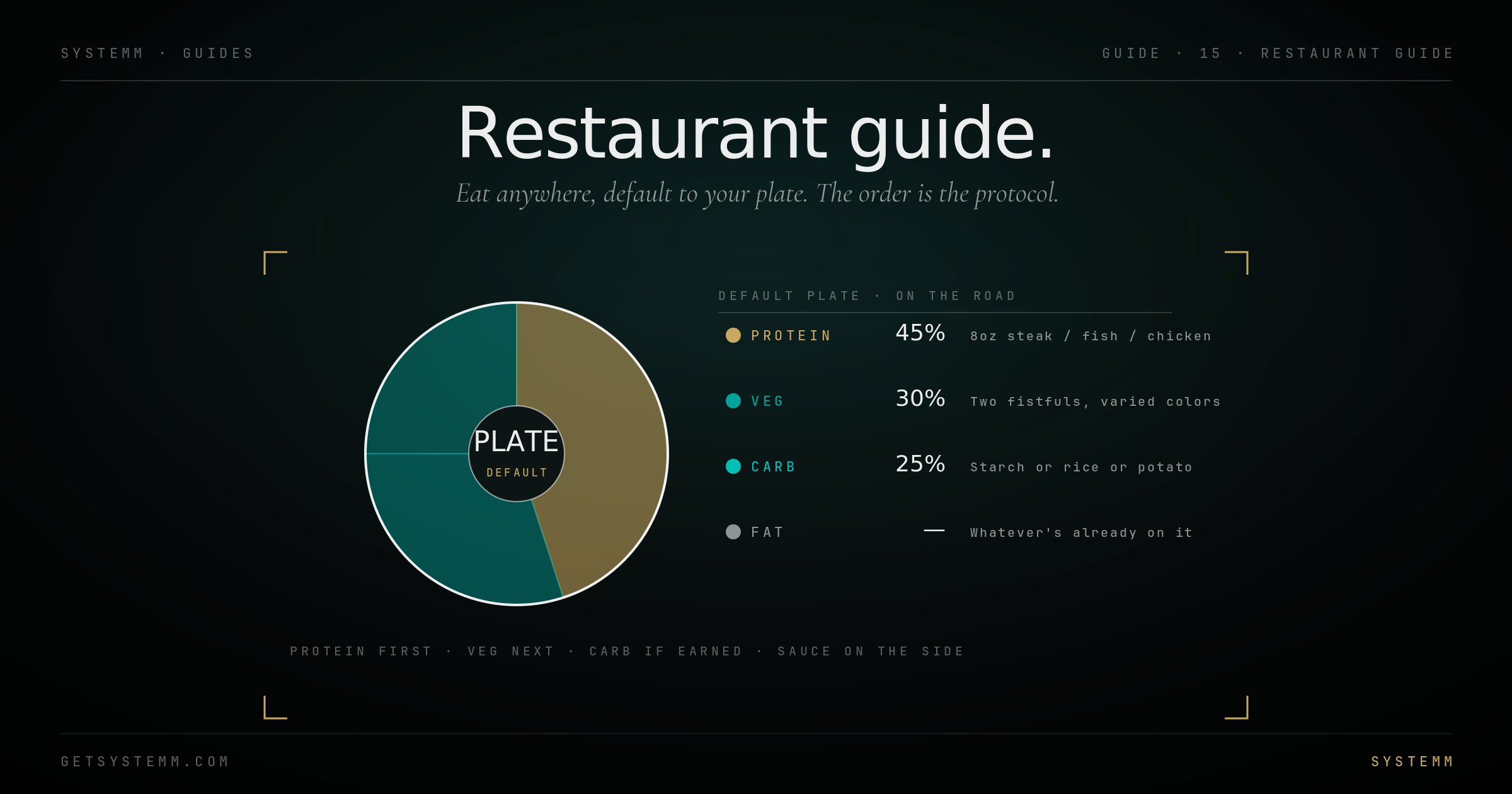
Half protein, third vegetables, quarter starch.
One mental template that works in every cuisine. Memorize the ratios; the menu adapts.
Protein: 45% of the plate. 6–8 oz of fish, chicken, beef, lamb, pork, or eggs. Plant proteins (tofu, tempeh, legumes) work if they're the dominant macro of the dish.
Vegetables: 30% of the plate. Whatever's available. Two fistfuls, varied colors. Cooked, raw, salad, side, doesn't matter.
Starch / grain: 25% of the plate, optional. Rice, potato, pasta, bread, tortilla, sweet potato. Earned by training that day or skipped if you're tracking carbs.
Fat: whatever's already on it. Oils, butter, dressing, cheese, already cooked into restaurant food in larger quantity than at home. Don't add more.
What to order, what to skip.
Cuisine-by-cuisine defaults. Cheat sheet for the eight most common.
Date night vs daily lunch vs travel.
Rules adjust by frequency. The strictness depends on how often you're out.
Daily lunch out (work-related, frequent travel). Default-plate everything. Sauce on the side. No drinks at lunch. Build a 3–4 restaurant rotation you know cold so decision-making is automatic.
Date night / once-a-week social. Order what you actually want. Skip bread basket, share dessert, alcohol fine in moderation. The single meal won't undo a week of base habits.
Travel / vacation. Loosen, but keep two anchors: protein at every meal and walking. The two together prevent most damage even when food choices are messier.
Special occasions. Don't apply rules. Once or twice a year, eat the whole steakhouse meal. The discipline is in the other 363 days.
- Protein at every meal, even special occasions.
- Water before/with alcohol, 1:1 ratio.
- Walking after dinner, even 10 minutes shifts the glucose curve.
- Sleep over food, don't sacrifice sleep to extend dinner.
Related.
For educational purposes only. Dietary needs vary by individual health status, training goals, and metabolic context. Specific medical conditions (diabetes, kidney disease, allergies) require individualized dietary guidance. This information does not substitute for personalized nutrition or medical advice.