Regrowth runs on a simple premise. Thinning is an androgenized environment problem, not a follicle-death problem. Shut down systemic DHT, clear the scalp of sebum-bound DHT, force follicles back into growth phase, and deliver a wake-up call to the dormant stem cells in the follicle bulge, and the follicles you still have come back online. Five components do the chemistry. A 1.5 mm derma stamp does the mechanical activation, once every fourteen days. Plan on six months. First visible results show up around Day 90.
I. The Stack
Five components, each with a distinct job: two oral, three topical (one delivered sub-Q or topical, depending on preference). Together they reverse the androgenized environment that ends a follicle's life in the first place.
| Component | Dosage | Frequency | Function |
|---|---|---|---|
| Dutasteride | 0.5 mg (Oral) | Daily | Blocks ~90%+ of DHT conversion from Testosterone. |
| Minoxidil | 2.5 mg (Oral) | Daily | Forces follicles into growth (anagen) phase. |
| Tretinoin | 0.025% to 0.05% | Nightly | Upregulates scalp enzymes and improves absorption. |
| Ketoconazole | 2% Shampoo | 2× Weekly | Topical anti-androgen, cleanses scalp of sebum DHT. |
| GHK-Cu | Sub-Q or Topical | Daily | Copper peptide for tissue repair and follicle enlargement. |
II. The Weekly Rhythm
The cadence matters as much as the stack. Each week follows the same shape: clean the scalp on Monday, stamp on Tuesday night, rest on Wednesday, resume Thursday, and run maintenance through the weekend. The two days that carry the most weight are Tuesday and Wednesday. Tuesday delivers the mechanical activation. Wednesday gives the scalp a full 24 hours with no chemical actives so the micro-channels close cleanly.
| Day | Activity | Topical Protocol |
|---|---|---|
| Monday | Deep Clean | Ketoconazole Shampoo (5 to 10 min soak) + Nightly Tretinoin. |
| Tuesday | STAMP DAY | Morning: Oral meds. Night: Stamp @ 1.5 mm. ONLY Hyaluronic Acid / GHK-Cu post-stamp. |
| Wednesday | REST DAY | No Tretinoin. No Minoxidil. Keep scalp clean. Use HA / GHK-Cu only. |
| Thursday | Resume Meds | Ketoconazole Shampoo + Resume nightly Tretinoin. |
| Fri through Sun | Maintenance | Standard daily oral meds + Nightly Tretinoin / GHK-Cu. |
III. The Stamp Session
Once every fourteen days, a 1.5 mm derma stamp delivers a controlled growth-factor cascade directly into the bulge region, the layer of the dermis where hair follicle stem cells live. The depth is non-negotiable. Too shallow and nothing reaches the target. Too deep and you risk impaling the follicle bulb you're trying to wake up. You are knocking on the door, not breaking it down.
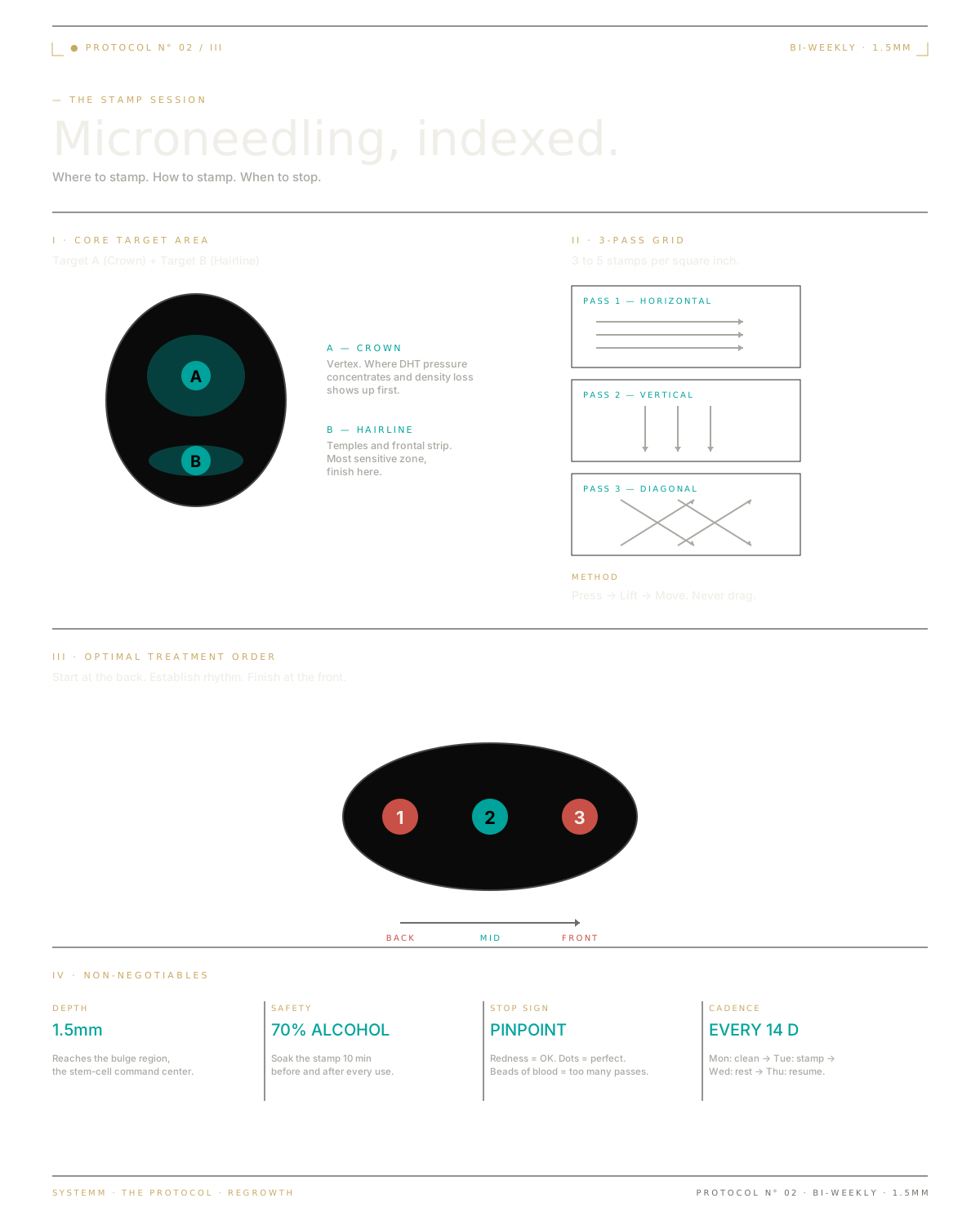
Tool, depth, and cadence
Use an adjustable derma stamp or an electric microneedle pen. Set the depth to 1.5 mm. Hair follicles live in the dermis at a depth of 2.0 mm to 4.0 mm. At 1.5 mm you reach the bulge region (the command center where stem cells live) without reaching the bulb (the root). Frequency is once every fourteen days. Any more often and the scalp doesn't have time to heal between sessions.
The 3-pass grid
Cover each square inch three times. Once horizontally, once vertically, once diagonally, at 3 to 5 presses per square inch. The grid technique guarantees uniform coverage without over-treating any single spot. Press, lift, move, press. Never drag the stamp across skin.
Treatment order
Start at the back of the scalp and work forward: back, mid-scalp, then front hairline. The back establishes rhythm without much sensitivity. The hairline is the most sensitive zone and benefits from being last, when your pressure and angle are dialed in.
Reading the scalp: when to stop
Instead of counting every single press, use visual cues. This is how the pros do it.
- The target. Erythema (redness). The scalp should look like it has a mild sunburn. Pink or red. That indicates blood has rushed to the surface, mission accomplished.
- The bonus. Pinpoint bleeding. Tiny red dots (petechiae). That's blood delivered exactly where it needs to be. Tiny dots only.
- The stop sign. If you see beads of blood, dripping, or skin that looks "shredded," you've done too many passes. Stop immediately.
Avoiding damage
- Don't drag. The stamp goes straight down and straight up. Press, lift, move, press. Never slide while pressed against the skin.
- Buzz the hair. Long hair tangles in the needles, which is the main way follicles get accidentally pulled out during stamping. A buzzed scalp drops that risk to nearly zero.
- Let the needle do the work. Firm pressure until the plastic guard touches the scalp is all the force you need. No jamming.
IV. The Non-Negotiables
Five rules that apply to the whole protocol, every week, no exceptions.
- The 24-Hour Rule. Never apply Tretinoin or Minoxidil to "open" skin. The stamp creates micro-channels and topicals will absorb systemically through them. Wait the full 24 hours after stamping or risk chemical burns and systemic heart palpitations.
- Sterilization. Soak the stamp head in 70% Isopropyl Alcohol for ten minutes before and after every single session.
- Sun Protection. Tretinoin and microneedling both make the scalp highly photosensitive. Wear a matte scalp SPF or a hat any time you're outdoors during the protocol.
- Hyaluronic Acid (HA). Two functions. First, as a slip during stamping to prevent micro-tearing of the needle channels. Second, as a daily hydrator to combat Tretinoin-induced flaking.
- Zinc Balance. GHK-Cu is a copper peptide. With long-term use, supplement 15 to 25 mg of zinc daily to maintain your mineral ratios.
V. What to Expect
Hair growth is a slow-motion game. The timeline runs in months, not weeks, and the early signs are easy to misread.
Weeks 1 to 4. The Dread Shed.
Expect an uptick in shedding during the first three to four weeks. Do not stop the protocol. This is the "out with the old, in with the new" phase. Old hairs are being pushed out as new ones cycle into growth phase. It means the meds are working.
Month 3. The Mirror Test.
Around Day 90, look for vellus hairs ("peach fuzz") beginning to pigment and thicken. Don't evaluate before this point. It takes a follicle that long to shift from the resting phase to the growth (anagen) phase.
Month 6+. Cosmetic improvement.
By month six, you should see meaningful thickening through the mid-scalp and crown. The hairline lags the crown. That's normal.
Three signs you're on track
- The Mirror Test at Day 90. Don't judge before then.
- Scalp texture. Within the first month, the scalp should feel more supple and less tight. That's the sign that you're reversing the androgenized environment.
- The Shed. An uptick in the first three weeks is part of the process, not a failure of it.
Medical Disclaimer
This protocol is published for educational purposes only and does not constitute medical advice. Dutasteride, oral Minoxidil, and Tretinoin are prescription medications with documented side effects. Oral Minoxidil and Dutasteride are not first-line FDA-approved hair-loss treatments and require physician supervision. Dutasteride is contraindicated in women of childbearing potential. GHK-Cu and compounded peptides are not FDA-approved for hair regrowth and must be obtained from a licensed compounding pharmacy under the direction of a qualified prescriber. Microneedling carries infection and scarring risk if performed on unclean skin or with unsterile equipment. Do not begin, stop, or modify any component of this protocol without consultation with a licensed physician familiar with your medical history, medications, and goals. SYSTEMM is a publisher, not a clinic, and is not your physician.