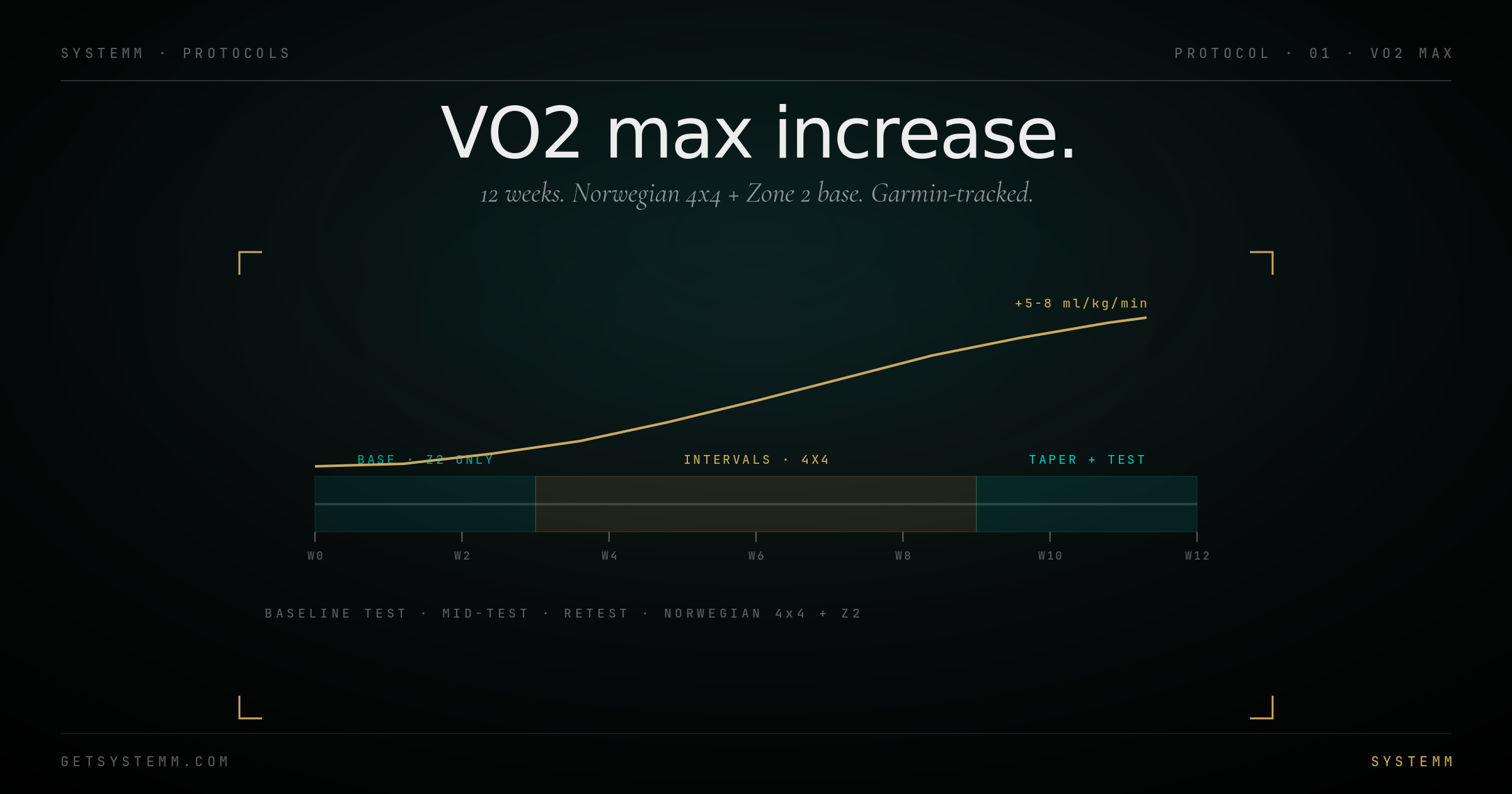
The most predictive longevity metric you can directly train. Every 1 ml/kg/min increase in VO₂ max correlates with measurable reductions in all-cause mortality. The Norwegian 4×4 interval protocol — and a Zone 2 base — produce the largest documented increases in healthy adults.
01 · BASELINE
Test before you train.
Without a baseline, you can't know if it worked.
Lab test (preferred): CPET with VO₂ measurement. $300-500. The gold standard.
Field test (acceptable): Cooper test (12-min max run) or Garmin watch estimation from a tempo run.
- Cooper test ≥2.4 km = ~50 ml/kg/min for 40-year-old male
- Garmin estimates are within ~3 ml/kg/min of lab CPET in most users
- Record HR max during the test — sets your training zones
02 · PHASE 1
Base · Weeks 1-3.
Zone 2 only. Build the aerobic foundation.
Zone 2 = 60-70% of HR max. Conversational pace — you can talk in full sentences but not sing. Most users find it slower than they expect.
- 3-4 sessions per week, 45-60 min each
- Treadmill, bike, rower, brisk walk on incline — all work
- Resist the urge to go faster. Going harder shifts you out of Zone 2 and into a different adaptation.
03 · PHASE 2
Intervals · Weeks 4-9.
Norwegian 4×4. The protocol that produces the biggest lifts.
Each session: 10-min warmup → 4 × (4 min at 90-95% HR max + 3 min active recovery) → 5-min cooldown. Total ~40 minutes.
- 2 interval sessions per week (Tuesday + Friday is standard)
- 1-2 Zone 2 sessions per week to maintain base
- 1 day fully off
Effort calibration: If you can complete the 4-min work block easily, you're not in Zone 5. If you can't complete the 4th rep, you're going too hard early. Last minute of each work block should feel near-failure.
04 · PHASE 3
Taper + retest · Weeks 10-12.
Reduce volume, hold intensity, then test.
Week 10-11: cut volume to ~60% of peak. Keep 1 interval session per week, 1 Zone 2.
Week 12: test. Same conditions as baseline (time of day, sleep, hydration).
- Expect +3-5 ml/kg/min for casual starters
- Trained athletes: +1-3 ml/kg/min (smaller relative gains)
- Older starters (50+): +5-8 ml/kg/min not uncommon
05 · ADJUNCTS
What helps, what doesn't.
- Sleep 7+ hours: largest non-training lever
- Creatine 5g/day: small but measurable
- Beetroot juice 60-90 min pre-session: small endurance benefit
- Caffeine pre-workout: improves perceived effort
- Don't: cold plunge within 6h of interval sessions (blunts adaptation)
Disclaimer: Maximum-effort interval training carries cardiac risk. Get medical clearance if 40+ or any cardiovascular risk factors. Stop if chest pain, severe dyspnea, or syncope occur.