Gut Microbiome.
Diversity is the metric. Fiber is the lever. The other organ you can train, and the one most modern lifestyles quietly degrade.
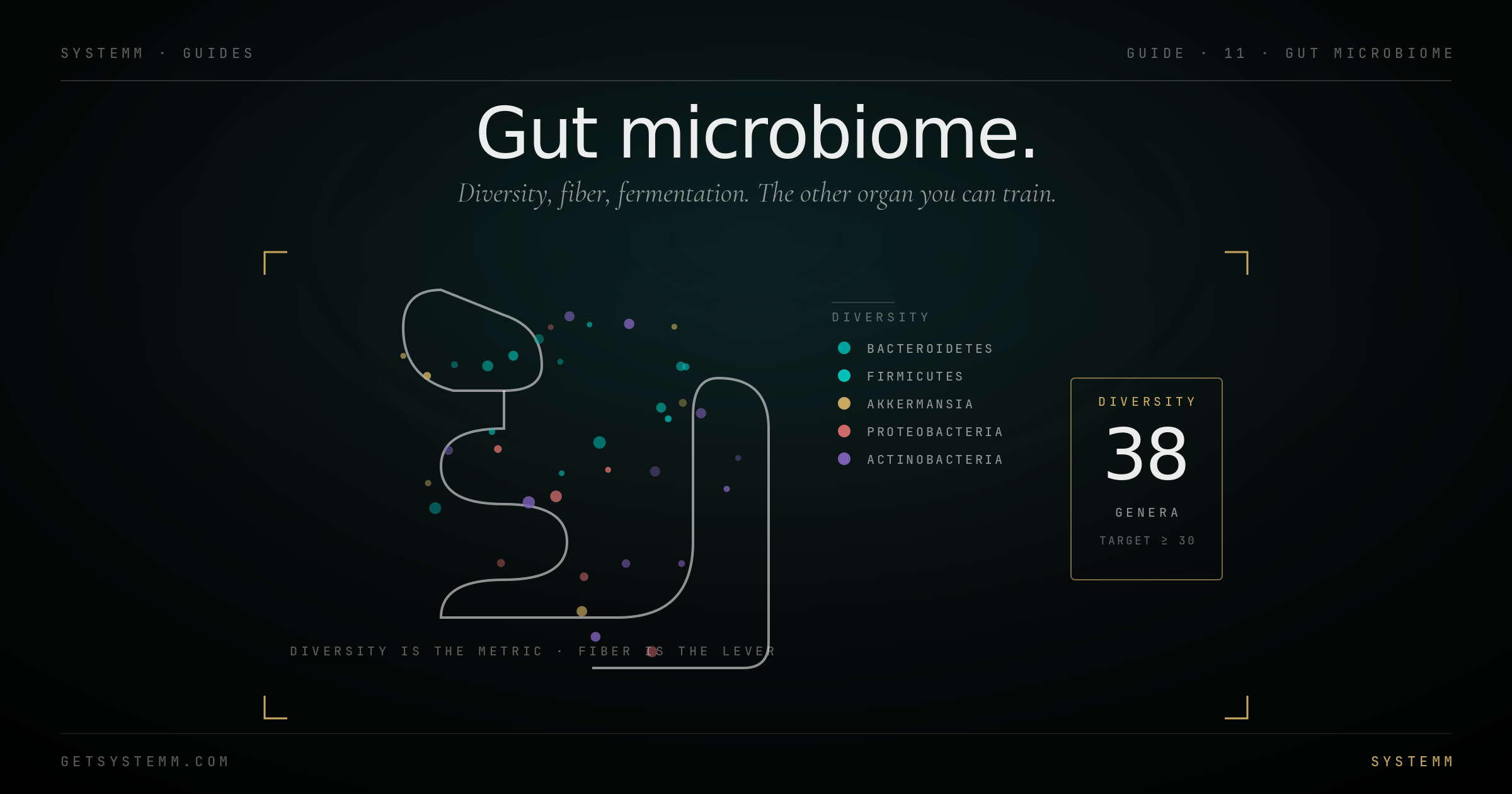
100 trillion microbes, one organ.
The gut microbiome is functionally an organ, it produces metabolites, regulates immunity, and talks directly to the brain.
The gut microbiome is the collection of bacteria, archaea, viruses, and fungi living in the gastrointestinal tract. Population: ~100 trillion organisms. Diversity: hundreds of species in a healthy person, far fewer in a stressed one.
What they do: ferment fiber into short-chain fatty acids (butyrate, propionate, acetate) that feed gut epithelial cells, regulate immunity (~70% of the immune system sits in gut-associated lymphoid tissue), produce neurotransmitters (90% of serotonin is made in the gut), synthesize vitamins (K2, several B vitamins), and modulate inflammation systemically via the gut-liver-brain axis.
Why diversity matters: a diverse microbiome is metabolically flexible, different species handle different substrates, produce different metabolites, and provide functional redundancy. A monoculture is fragile.
What kills diversity.
Five inputs do most of the damage. Mostly avoidable, mostly modern.
Low fiber intake. The single largest driver. Most Western adults eat 10–15g of fiber daily; the gut microbiome needs 30–50g to maintain diversity. Without fiber substrate, fiber-fermenting species starve and disappear.
Repeated antibiotic exposure. Each course kills susceptible species, opening niches that opportunistic species fill. Recovery can take 6–12 months. Multiple courses compound the damage.
Ultra-processed food. Emulsifiers (polysorbate-80, carboxymethylcellulose), artificial sweeteners (sucralose, aspartame), and certain preservatives alter the microbial composition in measurable ways.
Chronic alcohol. Daily drinking suppresses beneficial bacteria and increases gut permeability (so-called 'leaky gut').
Chronic stress. Cortisol changes gut motility and bile acid composition; both shape the microbial environment. Real, measurable effect.
How to actually train it.
Diversity in equals diversity out. The plant-count goal is the single best heuristic.
30 different plants per week. This is the heuristic from the American Gut Project, people who eat 30+ different plant species per week have measurably more diverse microbiomes than those who eat <10. Plants count: vegetables, fruits, legumes, grains, nuts, seeds, herbs, spices. Variety beats quantity.
Fermented foods. Yogurt, kefir, sauerkraut, kimchi, miso, tempeh, certain cheeses. Live cultures plus prebiotic substrate. Some trials show fermented foods outperform fiber alone for diversity, though both together is best.
Polyphenols. Berries, dark chocolate, green tea, coffee, olive oil, red wine (in moderation). Polyphenols selectively feed Akkermansia muciniphila and other beneficial species.
Resistant starches. Cooled cooked potatoes, green bananas, oats, legumes. Resist digestion in the small intestine, reach the colon intact, feed butyrate-producing bacteria.
Outdoor time. Underrated. Exposure to soil bacteria, plants, and animals diversifies environmental microbial input. Kids who grow up on farms have measurably more diverse microbiomes.
When and what to test.
Routine microbiome testing is mostly noise. Symptom-driven testing for specific dysbioses is useful.
Consumer microbiome tests (Viome, Thryve, formerly uBiome) sequence 16S rRNA and report relative abundance plus diversity scores. Reproducibility is poor, day-to-day variability is large, and clinical actionability is limited for healthy people. Interesting but rarely decisive.
Clinical stool tests (GI-MAP, GI Effects, GI360) target specific pathogens, opportunists, parasites, and inflammation markers. Useful when symptoms drive testing, IBS, chronic diarrhea, post-antibiotic recovery, suspected SIBO.
Breath tests (lactulose, glucose) diagnose SIBO (small intestinal bacterial overgrowth). Required workup if you have post-meal bloating that's worse with high-fiber foods.
What's reasonable for a healthy person: track fiber intake, count plants per week, note bowel pattern. Skip routine testing unless symptoms emerge.
- Most commercial probiotic capsules don't survive stomach acid or establish in the gut.
- Strain specificity matters, a 'multi-strain' label without specific strains is marketing.
- Food sources outperform supplements for healthy populations.
- Targeted probiotics (e.g., S. boulardii for antibiotic-associated diarrhea) have specific clinical use cases.
Related.
For educational purposes only. Persistent GI symptoms warrant evaluation by a gastroenterologist. Microbiome science is evolving; some recommendations may revise as understanding deepens. This information does not substitute for personalized medical advice.